
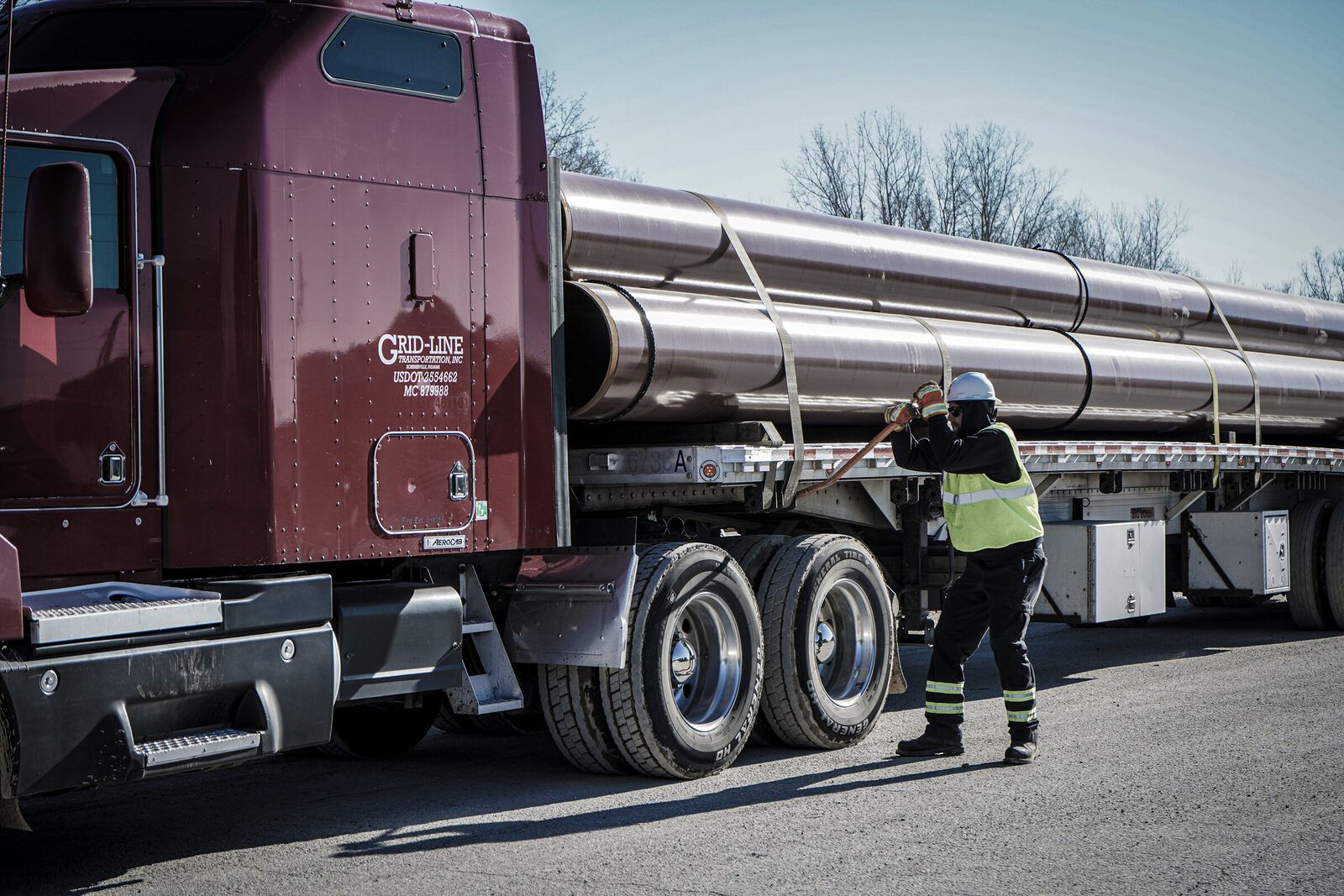
Steel tubing & pipe transportation
Pipe and tubing are long, round and easy to get wrong on a trailer. Grid-Line moves them on open-deck flatbeds across the Midwest, loaded in bundles, flat layers or pyramid stacks, blocked against rolling and tied down by drivers trained in steel securement.
Round steel, flat deck.
Pipe wants to roll and tubing wants to slide. Both are handled by how the load is built: dunnage under it, blocking or stakes beside it, and tie-downs over every tier. The shape of the order decides which of these four loads it becomes. For the other forms of steel, see how steel is transported.
Bundled tube
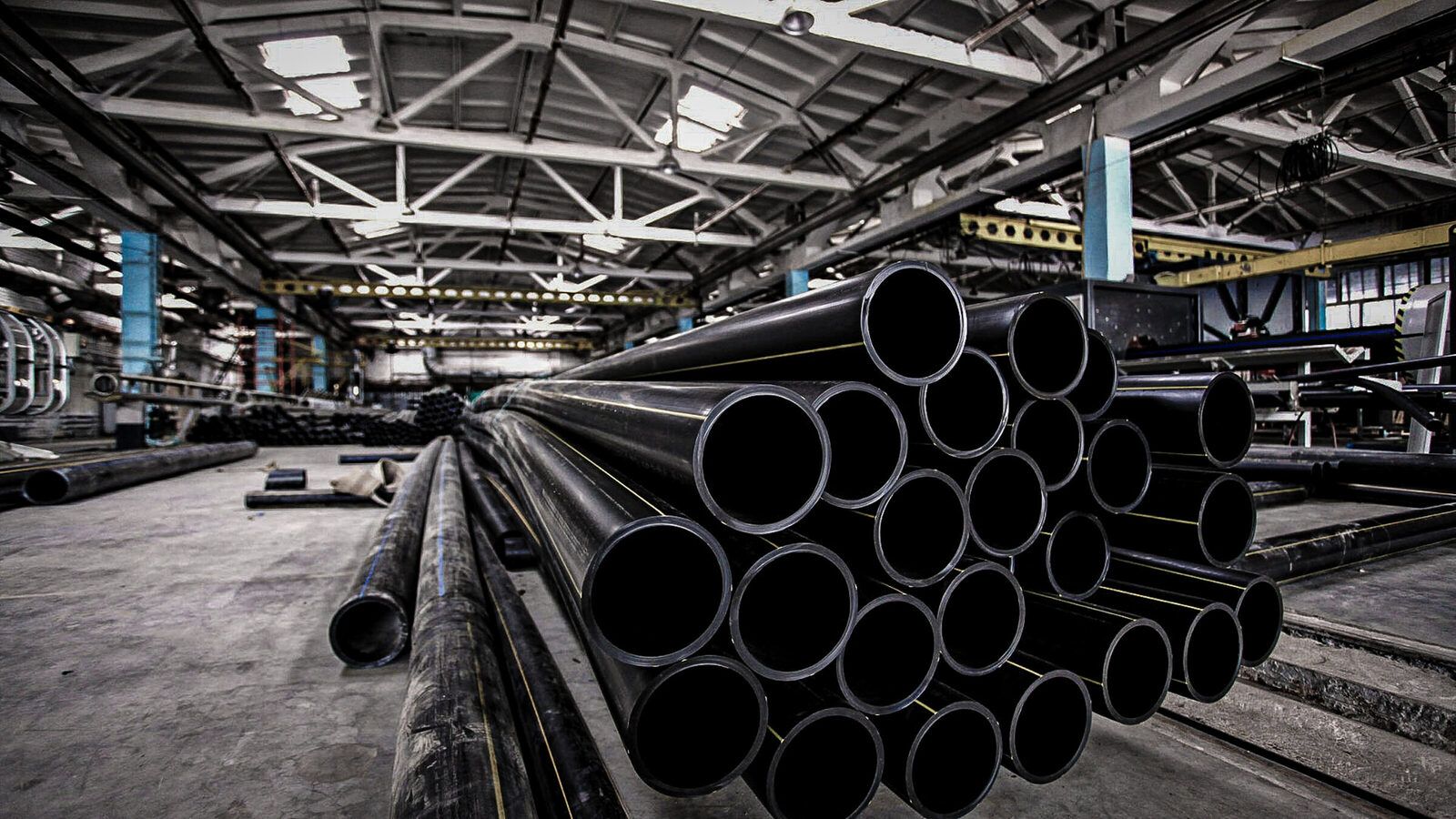
Square, rectangular and small-diameter round tube ships in strapped bundles. Bundles sit flat on dunnage and are tied down as units, so the bundle straps and the truck tie-downs work together.
Loose pipe, flat
Larger pipe rides in a single flat layer, with dunnage under it and blocking or pipe stakes along the sides so nothing can roll. The widest, heaviest pipe goes on the deck; nothing stacks above it.
Pyramid stacks
Where the pipe and the route allow it, a pyramid stack puts a smaller row on top of a wider base row, with dunnage between tiers and tie-downs over every tier. It uses the deck well but has to be built from the bottom up.
Long lengths
Pipe and tubing use the length of the deck. The trailer, the overhang and the permit plan are chosen around the longest piece in the order, not just its weight.
Blocked, chained and tarped.
Pipe and tubing are loaded by forklift or crane from the side or from above, so they ride on open-deck flatbeds. On our steel lanes that means 48' and 45' flatbeds, the same equipment that carries coil, plate and bar.
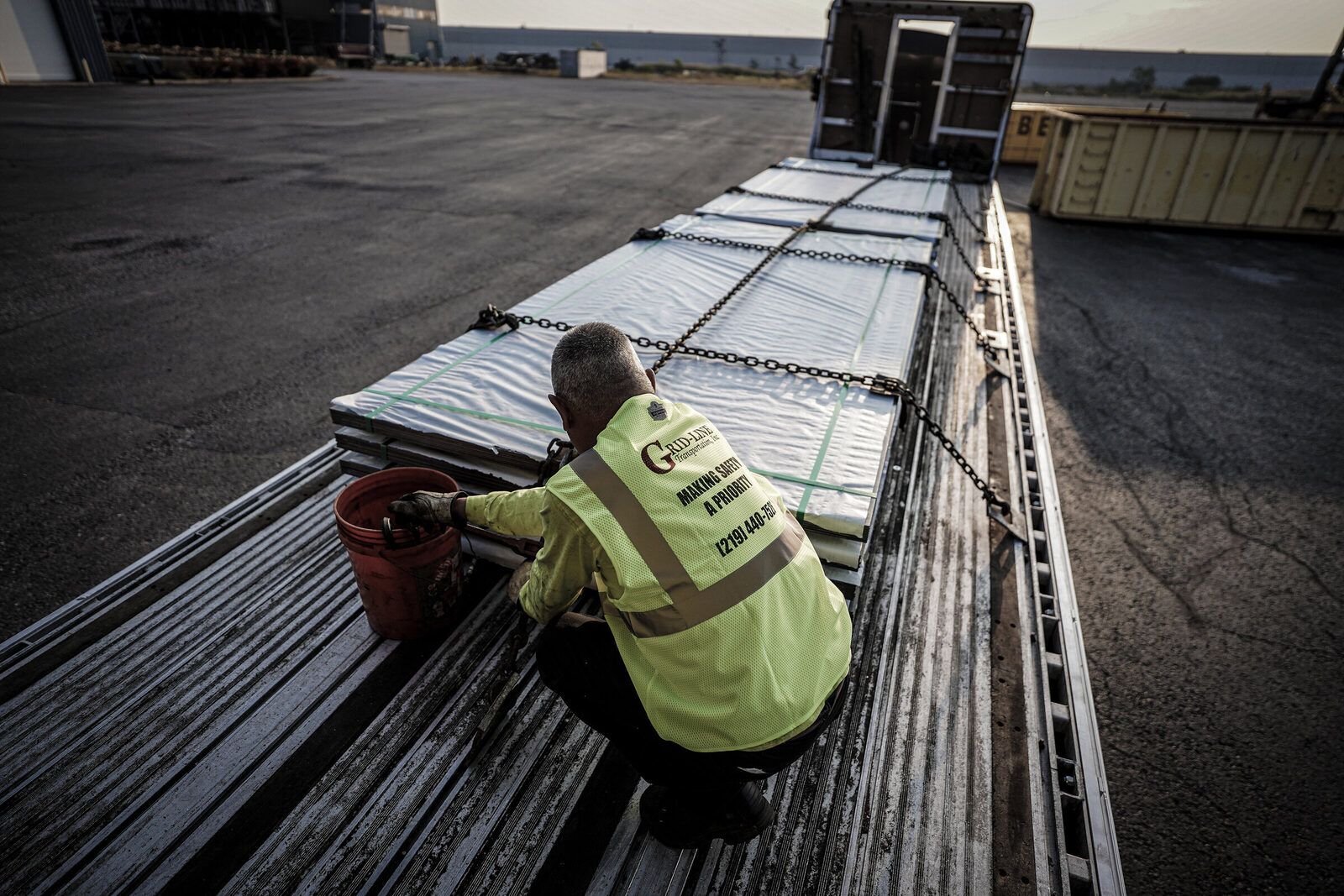
Securement follows the FMCSA cargo securement rules in 49 CFR Part 393. The working load limit of the tie-downs on a load has to add up to at least half the cargo weight, and the number of tie-downs scales with the length of the article: short pieces need one or two, and every additional stretch of length needs another. Round stock also has to be blocked, chocked or cradled so it cannot roll. The same rules require the driver to re-inspect the securement early in the trip and periodically after that. Our drivers build pipe loads to those rules.
Pipe and tubing that must arrive dry or scratch-free are tarped once secured. Every Grid-Line driver has at least two years of verifiable CDL experience, including a year on flatbeds, and completes our two-week flatbed and steel securement training program.
When pipe needs a permit.
Pipe is more often over-length than overweight. The length of the longest piece, not the tonnage, is usually what decides the trailer, the route and whether the load needs a permit.
- Deck length first. Pipe up to the deck length of a 48' or 45' flatbed rides with no overhang. Longer pieces can typically overhang the rear within each state's allowance, with flags or lights as required; beyond that the load is over-length.
- Width and height. Legal width on the Interstate system is 8'6", and most Midwest states allow about 13'6" of height. A pyramid stack or a wide bundle that goes past those limits is an oversize load, and the plan has to be made before the truck is loaded.
- Weight. The standard federal gross vehicle weight limit is 80,000 lb, and heavy-wall pipe can reach it well before it fills the deck. We plan the load around the axle weights, not just the total.
- Oversize and overweight permits handled. We know the regulations and permits needed to haul these loads safely and legally. See transportation solutions.
Midwest pipe lanes, home daily.
Pipe and tubing move from mills and tube producers to distributors, fabricators and job sites. Most of that freight is regional, which suits a carrier whose trucks are within a day of the next load.
- A 300+ mile radius around our Schererville, Indiana base, with same-day or next-day delivery as the operational standard.
- Key markets: northwest Indiana, Chicagoland, Indianapolis, Butler, IN, Delta, OH, Jeffersonville, IN / Louisville, KY and Granite City, IL.
- Long steel and pipe already move with us out of northwest Indiana alongside coil, plate and bar, on the same flatbeds and with the same drivers.
- Recurring or one-time. A single rush load or a steady weekly schedule, with trailers dropped at your facility for next-day pickup when that helps.
See every market on our service areas page, or the statewide picture on Indiana flatbed trucking.
Pipe & tubing FAQ
How is steel tubing transported?
On open-deck flatbeds. Tube ships in strapped bundles and pipe ships loose in flat layers or pyramid stacks, on dunnage, blocked against rolling and tied down over every tier under the FMCSA cargo securement rules. It is loaded and unloaded by forklift or crane from the side or from above, which is why it does not move in enclosed trailers.
What length of pipe fits on a flatbed?
Our coil and steel lanes run 48' and 45' flatbeds, so pipe up to the deck length rides without overhang. Longer pieces can typically overhang the rear within each state's allowance; past that the load is over-length and needs a permit. Send us the longest piece in the order and we will plan the trailer and any permits around it.
Do you tarp pipe and tubing?
When the finish calls for it. Pipe and tubing that must arrive dry or scratch-free are tarped once secured, the same way we tarp coil and finished steel.
Can you haul oversize or overweight pipe?
Yes. We know the regulations and permits needed to move oversize and overweight material safely and legally, and the plan is made before the truck is loaded.
Where do you haul pipe and tubing?
Across a 300+ mile radius of our Schererville, Indiana base: northwest Indiana, Chicagoland, Indianapolis, Butler, IN, Delta, OH, Jeffersonville, IN / Louisville, KY and Granite City, IL, with same-day or next-day delivery.
What do you need to quote a pipe shipment?
Pipe outside diameter and wall, or tube profile; piece length; bundle count or piece count; total weight; whether it needs tarping; and the pickup and delivery addresses and timing. Send it through our contact form or call (219) 440-7526 ext. 6. We respond within one business day.
Send us the longest piece.
To quote pipe or tubing we need the outside diameter and wall or the tube profile, the piece length, the bundle or piece count, the total weight, whether it needs tarping, and where and when it moves. With that we can pick the trailer, plan any permits and come back with pricing and availability within one business day.
Get a pipe quote →