
How steel is transported
Steel leaves the mill as coil, sheet, plate, bar, beam and pipe, and each form travels differently. This guide covers how rolled and long steel moves by flatbed truck: the equipment, how loads are secured and tarped, what drives weight and permits, and how regional steel lanes work.
The forms steel takes.
How steel is shipped starts with its shape. Rolled steel and long steel load, sit and secure on a trailer in different ways, and the heaviest pieces set the rules for the whole load. For the coil side in depth, see steel coil hauling.
Steel coil
Flat-rolled steel wound into a coil: compact, dense and heavy for its size. Coil ships as standup coil or skidded coil, one coil at a time or as two-coil loads. On our coil lanes, typical loads run 42,000 to 47,000 lb, and single coils go up to 72,000 lb.
Sheet, plate and mill rolls
Flat-rolled sheets and plates, plus mill rolls, ship flat and stacked on the deck. They are a regular load on our Butler and Louisville lanes alongside coil.
Bar, rod, billet and beam
Long products: bars, billets, wire rods, rods and beams. Long steel uses the length of the deck, so the trailer and the securement plan are chosen around the piece, not just the weight.
Pipe and tubing
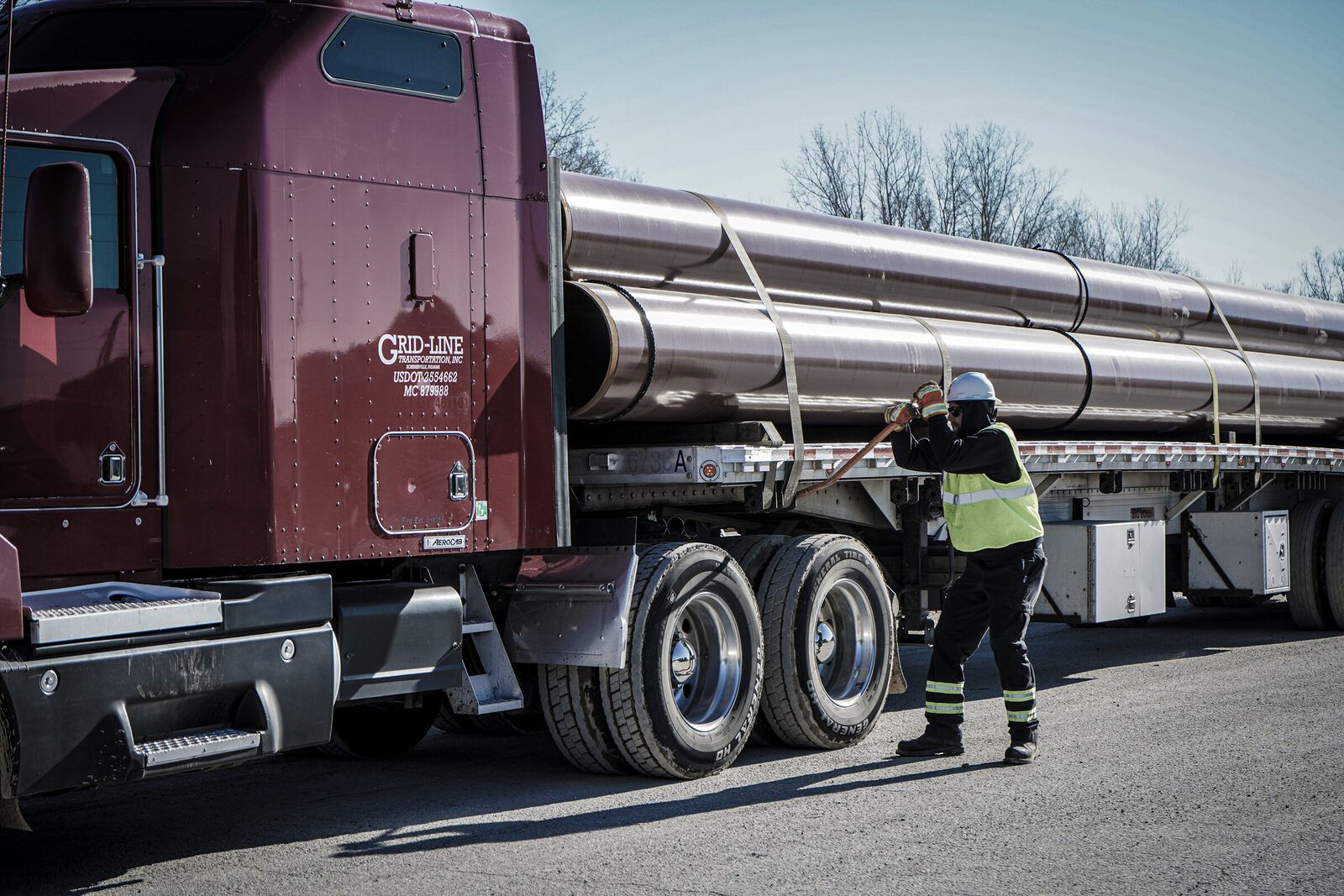
Pipe and tubing travel in bundles. They are secured against shifting along their length, and like all steel they are hauled on open-deck equipment that loads from the side or from above.
Open decks, secured by hand.
Steel is loaded at mills, processors and service centers by crane or forklift, from the side or from above. That is why steel trucking runs on open-deck flatbeds rather than enclosed vans. On our coil lanes, that means 48' and 45' flatbeds set up for standup and skidded coil.
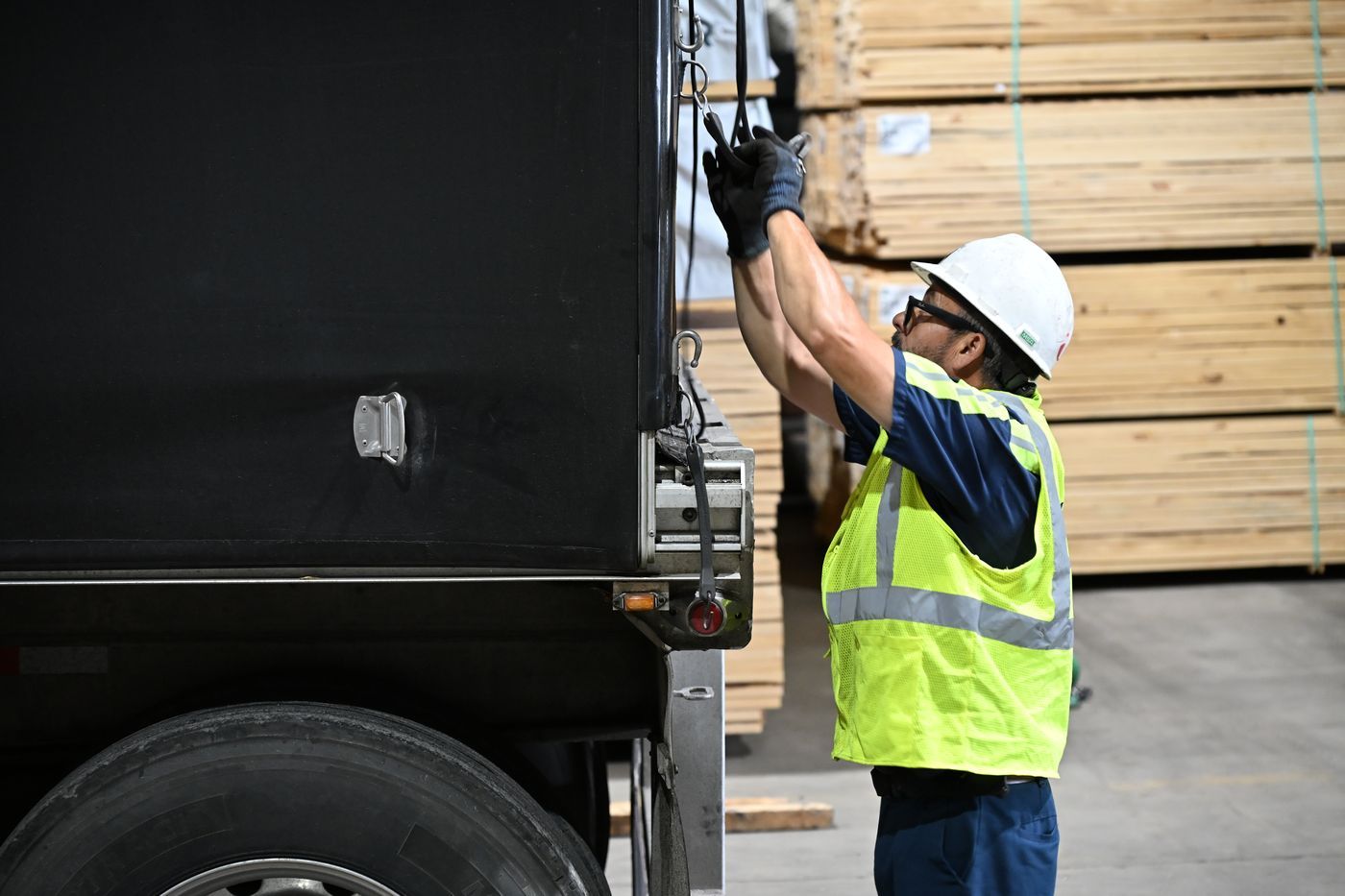
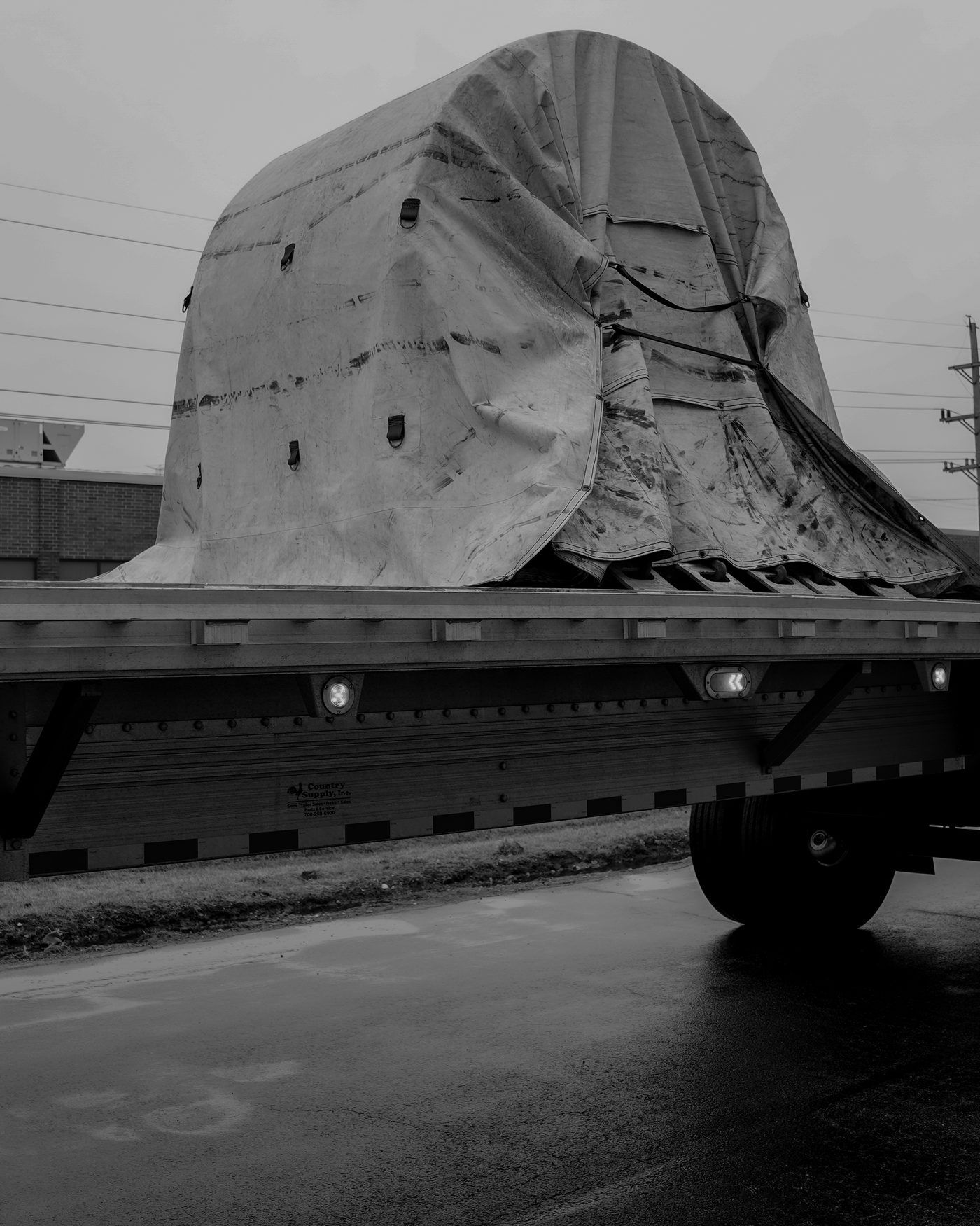
Steel is dense, so a load can reach its weight long before it fills the deck. Where each piece sits, and how it is chained or strapped down, matters as much as how fast it moves. Coils, sheet and finished steel that must arrive dry are tarped once secured.
The person doing that work is the driver. Every Grid-Line driver has at least two years of verifiable CDL experience, including a year on flatbeds, and completes our two-week flatbed and steel securement training program. We follow FMCSA compliance standards and conduct regular equipment inspections.
Heavy loads, legal loads.
Legal weight and size limits decide how much steel one truck can carry. Freight that goes past them needs oversize or overweight permits for the route, and the plan has to be made before the truck is loaded.
- Single coils up to 72,000 lb. Our equipment is set up to transport heavy single steel coils safely and securely.
- Heavy two-coil loads. On some lanes, two-coil shipments run well over 59,000 lb of cargo and need the right truck and a driver who secures them properly.
- Typical coil loads of 42,000 to 47,000 lb, depending on the lane.
- Oversize and overweight permits handled. With our expertise in permitting and DOT regulations, we move oversize and overweight material within legal guidelines. See transportation solutions.
Mill to processor, and back.
A great deal of steel trucking is regional: coil from the mill to a processor, then sheet and finished steel on to service centers, manufacturers and job sites. The best lanes are loaded in both directions, so trucks are where the next load is.
- A 300+ mile radius around our Schererville, Indiana base, with same-day or next-day delivery.
- Key steel markets: Chicagoland, Indianapolis, Butler, IN, Delta, OH, Jeffersonville, IN / Louisville, KY and Granite City, IL.
- Two-way lanes. Coil runs both ways between Granite City and Chicagoland, Butler ships coil west with coil backhauls coming in, and Louisville takes coil in and sends finished steel north.
- Recurring work. From 10 local steel coil transfers a day to steady weekly schedules, with trailers dropped at your facility for next-day pickup when you need it.
See every market on our service areas page, or start with our home region: northwest Indiana flatbed trucking.
Steel transport FAQ
How is steel transported?
Over the road, steel moves on open-deck flatbed trucks, because coil, plate, bar, beam and pipe are loaded by crane or forklift from the side or from above. Each form has its own way of being positioned and secured on the deck. Grid-Line hauls all of them on flatbeds across a 300+ mile radius of Schererville, Indiana.
What kind of truck hauls steel coil?
A flatbed set up for coil. On our coil lanes we run 48' and 45' flatbeds for standup coil, skidded coil and two-coil loads.
How heavy can a steel load be?
Single steel coils go up to 72,000 lb. Typical coil loads on our key lanes run 42,000 to 47,000 lb, and some heavy two-coil loads are well over 59,000 lb of cargo. For oversize or overweight material, we handle the permits and DOT requirements within legal guidelines.
Who secures the load?
The driver. Every Grid-Line driver has at least two years of verifiable CDL experience, including a year on flatbeds, and completes our two-week flatbed and steel securement training program.
Steel is what we haul.
Since 2014, Grid-Line has hauled steel coils, flat-rolled sheets, plates, bars, billets, wire rods, beams, rods, pipe and tubing for mills and processors across the Midwest, on flatbeds and with drivers trained in steel securement. See what else we move on transportation solutions.
Share your origin, destination and timing, and we will come back with pricing and availability within one business day.
Get a steel quote →